Coupe vs. Convertible in California: Which Luxury Car Should You Rent?
BY FALCON CAR RENTAL
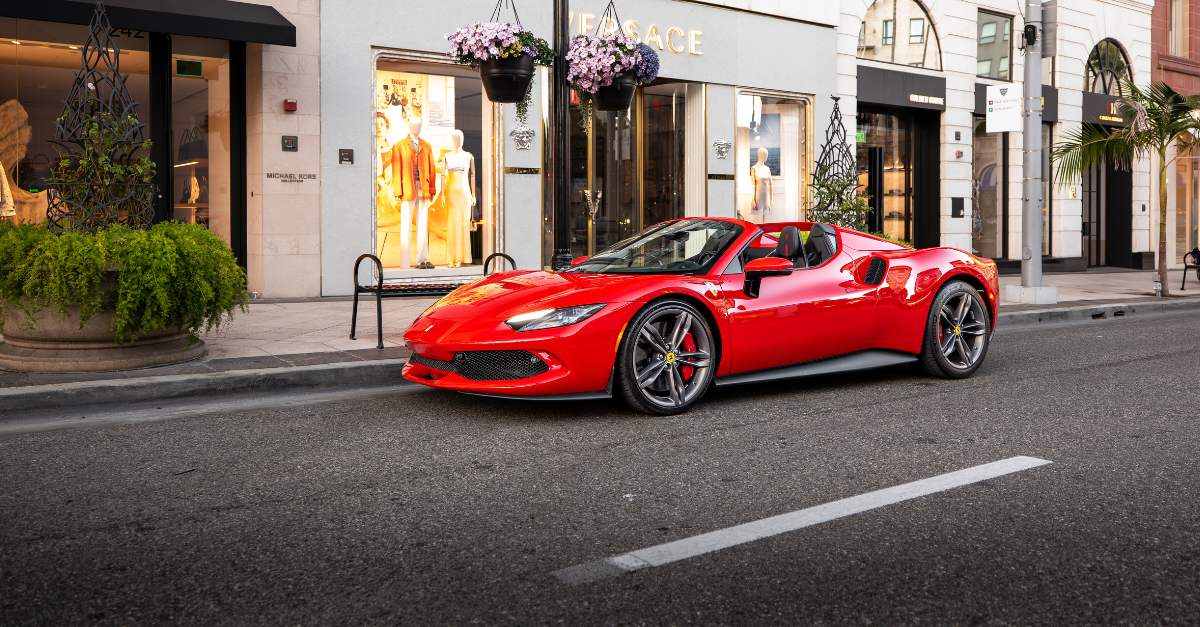
California makes the coupe-versus-convertible decision more interesting than almost anywhere else.
A coupe gives you a quieter, more controlled environment for long drives, changing weather, and busy city days. A convertible brings the landscape into the experience, turning Malibu, Palm Springs, Newport Beach, and the Pacific Coast Highway into something far more immersive.
Both can be exceptional. The better choice depends less on which one looks best in photographs and more on how you actually plan to travel.
How far are you driving? How much luggage are you bringing? Will the car spend most of its time in Los Angeles traffic or on scenic coastal roads? Are you traveling for business, leisure, or a combination of both? And most importantly, how much of the trip do you genuinely expect to spend with the roof down?
Those questions usually make the answer much clearer.
Why a Coupe Still Makes So Much Sense
A great coupe creates a more consistent driving environment.
The fixed roof generally provides better insulation from wind and outside noise, while the cabin remains comfortable regardless of whether the morning begins cool near the coast and the afternoon ends somewhere much warmer inland.
That can matter more in California than visitors expect. Malibu may be overcast in the morning while Palm Springs is experiencing intense desert heat a few hours later. A longer itinerary may involve freeway traffic, nighttime driving, phone calls, and several hours behind the wheel in one day.
A coupe handles those transitions almost invisibly.
For business travel or longer road trips, that quietness becomes part of the luxury. Conversations are easier, climate control works without competing with open-air conditions, and the overall experience feels more composed.
There is also a design argument. Many sports cars were originally conceived as coupes, and the uninterrupted roofline can give them a cleaner, more focused appearance. A Porsche 911 Coupe, for example, has a purity to its shape that has remained recognizable for generations.
A coupe is not necessarily the less emotional choice. It simply delivers its character through control, refinement, and focus rather than exposure to the environment.
What a Convertible Adds That a Coupe Cannot
A convertible changes the relationship between the car and the road.
Lower the roof along the California coast and the ocean is no longer simply something you see through the windshield. You feel the temperature change near the water, hear more of the surroundings, and experience the scenery in a way an enclosed cabin cannot fully reproduce.
That is why convertibles make so much sense for leisure travel in Southern California.
A drive from Beverly Hills through Santa Monica and toward Malibu may not be particularly long, but with the roof down at the right time of day, it can become one of the most memorable parts of the trip. The same is true in Palm Springs, where mountain views, desert architecture, and warm evenings naturally suit open-air driving.
Modern convertibles also require fewer compromises than older ones. Improved roof insulation, wind management, heated and ventilated seating, powerful climate systems, and better structural engineering mean many luxury convertibles feel impressively refined with the roof closed.
The real advantage is choice. You can open the car to the surroundings when the conditions are right and close it again when comfort becomes more important.
Does a Coupe Actually Perform Better?
Technically, a fixed roof has structural advantages.
Removing the roof means engineers need to reinforce other areas of the chassis to maintain rigidity, and those reinforcements can add weight. Depending on the model, a coupe may therefore be lighter or slightly more structurally rigid than its convertible equivalent.
For track driving, those differences can matter.
For a California road trip, they usually matter far less than people assume.
Manufacturers such as Porsche, BMW, Mercedes-AMG, Ferrari, and Aston Martin invest heavily in preserving the character of their open-top models. A modern 911 Cabriolet, BMW M4 Competition Convertible, or Mercedes-AMG SL is designed to remain composed and engaging despite the compromises required by the roof mechanism.
For most renters, the meaningful difference will not be a small change in chassis rigidity. It will be the atmosphere behind the wheel.
The coupe feels more concentrated. The convertible feels more connected to the world around it.
When a Convertible Is the Better Choice
A convertible makes the strongest case when the journey itself is one of the reasons for taking the trip.
Malibu, Santa Barbara, Newport Beach, and Palm Springs all reward open-air driving when weather conditions cooperate. These are destinations where the light, temperature, scenery, and roads become part of the experience rather than simply the backdrop.
Palm Springs is a particularly good example. During comfortable mornings and evenings, a convertible feels completely natural against the desert landscape. Travelers who rent a convertible supercar in Palm Springs can enjoy the roof-down experience when temperatures are pleasant, then close the roof and rely on the climate control during hotter parts of the day.
The same principle applies along the coast. Early mornings and late afternoons can be ideal, while midday sun, strong wind, or cooler marine conditions may make a closed roof more comfortable.
A convertible is at its best when you treat the roof as an option rather than an obligation.
When a Coupe Is the Smarter Choice
A coupe generally becomes more attractive as the itinerary becomes longer or more demanding.
If the trip involves several hours of freeway driving, business appointments, late-night travel, changing weather, or frequent phone calls, the quieter cabin may matter more than the ability to drive open-top.
Luggage can also influence the decision. Convertible roof mechanisms need somewhere to fold or retract, and depending on the vehicle, that can reduce or reshape the available cargo area.
That does not mean a coupe will always have more luggage space. The difference varies significantly by model. But if you are traveling with larger bags, it is worth checking the exact vehicle rather than assuming the convertible will accommodate everything.
For longer journeys, simplicity has value. A coupe lets you get in, settle into the cabin, and focus on the drive regardless of what the weather is doing outside.
Sometimes that is exactly the kind of luxury the trip needs.
California’s Coast Makes a Strong Case for Going Open-Top
There is a reason California and convertibles have been linked culturally for decades.
A route through Malibu, Santa Barbara, or farther north is not simply about reaching another city. The changing scenery, ocean air, roadside stops, and light are part of what makes the drive worth doing.
This becomes even more compelling when the trip does not have to end where it started. With a one-way luxury car rental in California, eligible itineraries can allow the vehicle to be delivered at one location and returned at another, removing the need to retrace an otherwise beautiful route simply to return the car.
A traveler might begin in Beverly Hills, drive through Malibu and Santa Barbara, spend a few days farther north, and conclude the rental closer to where the trip naturally ends.
That kind of flexibility can matter as much as the choice between coupe and convertible itself.
Luxury travel should move forward.
Newport Beach Shows Why Either Choice Can Work
Newport Beach is a perfect example of a destination where both body styles make sense.
For a relaxed weekend built around the coast, restaurants, hotels, and shorter scenic drives, a convertible is difficult to resist. The environment naturally rewards open-air driving, particularly in comfortable weather.
But someone combining Orange County with meetings in Los Angeles, longer freeway drives, or a multi-day Southern California itinerary may prefer the quietness and consistency of a coupe.
Travelers who hire an exotic car in Newport Beach should therefore think beyond the badge or horsepower figure. A Ferrari Spider and a Porsche Coupe can both create an exceptional trip, but they serve different priorities.
The better question is not which car creates the strongest arrival. It is which one still makes sense several hours later.
Luggage Can Make the Decision for You
Luggage is one of the least glamorous considerations, but it can quickly determine which vehicle is practical.
Two travelers with compact soft bags can make many sports cars and convertibles work easily. Two large hard-shell suitcases may be a completely different story.
This is especially relevant with 2+2 sports cars. In vehicles such as the Porsche 911, the rear seats can become valuable luggage space when only two people are traveling. That makes the car significantly more practical for a weekend or multi-day trip than its exterior dimensions suggest.
Soft duffels are generally easier to position than rigid airline luggage because they can conform to irregular storage spaces. If the car is central to the experience, packing around the vehicle can often make more sense than choosing a less exciting vehicle purely because of oversized luggage.
And if you are arriving internationally with several checked bags, having larger luggage transferred to the hotel before the road trip can make the entire experience far easier.
Think Honestly About How Much Roof-Down Driving You Will Do
This may be the most useful question of all.
If you expect to lower the roof only once during a four-day trip, the coupe may be the better choice. If the itinerary is intentionally built around Malibu, Palm Springs evenings, Newport Beach, scenic coastal roads, and warm-weather leisure, the convertible becomes much more compelling.
California gives you excellent opportunities for open-air driving, but it does not guarantee perfect roof-down conditions every hour of every day. Coastal mornings can be cool, midday sun can become intense, and freeway driving with the roof open may be less appealing than a slower coastal route.
The advantage of the modern convertible is not that the roof must always be down. It is that the option is always there.
The FALCON Perspective
At FALCON car rental, choosing between a coupe and convertible should begin with the trip rather than the vehicle.
Where are you staying? How far are you driving? How much luggage are you carrying? Are you traveling alone, as a couple, or with additional passengers? Is the itinerary built around business, leisure, or both?
Those details usually reveal the better choice.
Convenience surrounding the vehicle matters too. Depending on the reservation, having the car delivered directly to a hotel or residence may make more sense than collecting it immediately after a flight. Larger luggage can be left behind before a convertible road trip begins, and eligible one-way arrangements can eliminate unnecessary backtracking when the journey ends somewhere else in California.
The goal should be simple: the car should improve the trip without becoming another logistical problem to solve.
Final Thoughts
Choosing between a coupe and a convertible in California is ultimately about deciding how you want the journey to feel.
A coupe offers greater isolation, a quieter cabin, consistent comfort, and a more focused environment. A convertible gives up some of that separation in exchange for something uniquely valuable: the ability to let California become part of the drive.
Neither is the universal answer.
For business travel, longer highway journeys, or schedules where consistency matters most, the coupe may be the smarter choice. For Malibu, Palm Springs, Newport Beach, Santa Barbara, or a one-way coastal escape, a convertible can turn the road itself into one of the reasons for taking the trip.
The best car is not necessarily the one that looks most impressive when you pick it up.
It is the one that still feels right when the luggage is loaded, the weather changes, the road opens up, and the trip is fully underway.