Ferrari and Lamborghini' Hybrid Battle: Temerario vs 296 GTB
BY FALCON CAR RENTAL
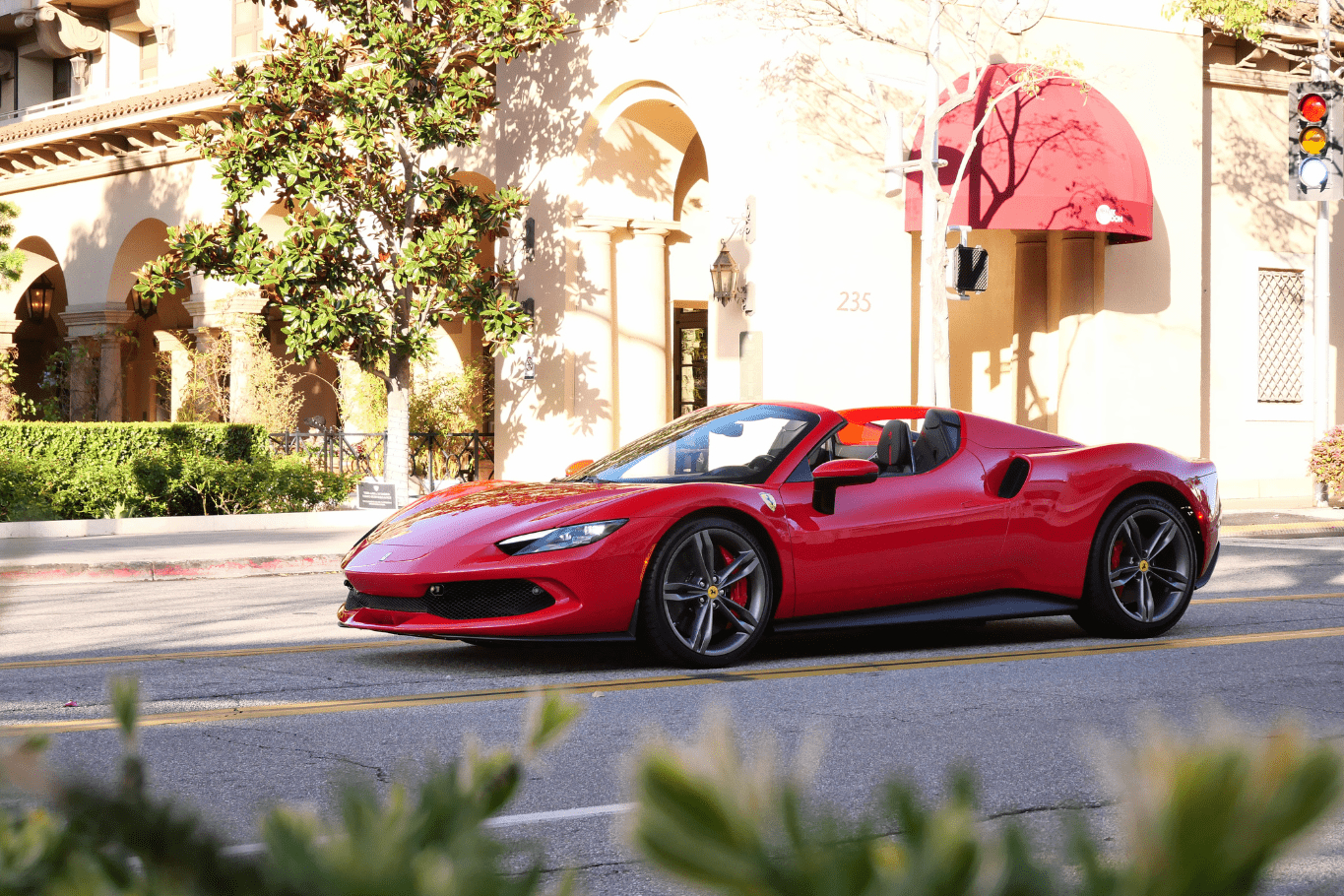
For decades, Ferrari and Lamborghini defined Italian performance through naturally aspirated engines, unmistakable design, and two very different ideas of excitement.
Ferrari built its reputation around balance, racing precision, and the relationship between driver and machine. Lamborghini leaned into theater: dramatic styling, unforgettable sound, and the sense that every journey should feel like an event.
Now both brands have entered the hybrid era.
The Lamborghini Temerario and Ferrari 296 GTB prove that electrification does not have to make a supercar quieter in character or less emotional to drive. Both use electric power to improve response, acceleration, and flexibility, but they do so in ways that remain completely faithful to their respective brands.
The Temerario is louder in attitude, more visually aggressive, and more powerful on paper. The 296 GTB is lighter in philosophy, rear-wheel drive, and engineered around agility and precision.
This is not simply a comparison of two hybrid supercars.
It is a contest between two different visions of the future.
Two Very Different Paths Into the Hybrid Era
Ferrari introduced the 296 GTB as a mid-engine, rear-wheel-drive plug-in hybrid built around an all-new 120-degree twin-turbocharged V6 and a rear-mounted electric motor. Together, the system produces 830 metric horsepower. Ferrari describes the car as an attempt to maximize driving enjoyment in both everyday conditions and at the limit.
Lamborghini took a different approach with the Temerario, the successor to the Huracán. Its new 4.0-liter twin-turbocharged V8 is paired with three electric motors, producing a combined 920 metric horsepower. The combustion engine alone develops 800 horsepower and can rev to 10,000 rpm, an unusually high figure for a turbocharged production engine.
That difference tells you a great deal about each manufacturer.
Ferrari built its system around compactness, balance, and rear-wheel-drive engagement. Lamborghini added more power, all-wheel-drive capability, and an electric motor layout designed to deliver immediate response and stronger traction.
Both are hybrids.
Neither feels like a compromise.
Lamborghini Temerario: A New Kind of Lamborghini Drama
Replacing the Huracán was never going to be straightforward.
The Huracán’s naturally aspirated V10 was central to its personality, and Lamborghini knew that moving to a smaller turbocharged engine could easily feel like a loss. The solution was not to imitate the old formula, but to create a new one with enough character to stand on its own.
The Temerario’s twin-turbocharged V8 is unusual because of how high it revs. Lamborghini says the engine reaches 10,000 rpm, with peak combustion-engine output arriving between 9,000 and 9,750 rpm. That gives it a more dramatic upper range than most turbocharged engines and helps preserve the rising sense of occasion enthusiasts expect from the brand.
The three-motor hybrid system adds another dimension. One electric motor sits between the engine and transmission, helping fill gaps in torque and sharpen response during gear changes. Two additional motors power the front axle, providing electric all-wheel drive and more sophisticated torque distribution.
The result is a car with 920 metric horsepower, a claimed 0–100 km/h time of 2.7 seconds, and a top speed of 343 km/h, or approximately 213 mph.
Those figures are exceptional, but the Temerario’s real appeal is not just speed. It is the way Lamborghini has used technology to create a different type of spectacle.
The V10 may be gone, but the sense of theater remains.
Ferrari 296 GTB: Precision Before Intimidation
The Ferrari 296 GTB takes a more focused approach.
Its 3.0-liter, 120-degree twin-turbocharged V6 produces 663 metric horsepower on its own. A rear-mounted electric motor adds another 167 metric horsepower, bringing total system output to 830. Ferrari’s unusually wide engine angle also helps lower the center of gravity and allows for a more compact powertrain layout.
Unlike the all-wheel-drive Temerario, the 296 GTB sends its power to the rear wheels. That decision is important because it helps define the Ferrari’s personality. The 296 is not trying to overwhelm the driver with traction and sheer force. It is trying to create a more direct, adjustable, and responsive experience.
Ferrari claims a top speed above 330 km/h and a power-to-weight ratio of 1.77 kilograms per metric horsepower. The company also emphasizes that the hybrid system was developed not only to increase outright performance, but to improve usability and driving enjoyment.
That is exactly how the 296 GTB comes across philosophically.
It is incredibly fast, but speed is organized around balance. It feels less like a machine designed to dominate the driver and more like one designed to build confidence. The hybrid system adds urgency without becoming the entire personality of the car.
The 296 GTB is proof that a modern Ferrari does not need twelve cylinders—or even eight—to feel emotionally complete.
Power and Performance: The Numbers Favor Lamborghini
On paper, the Temerario has the advantage.
Its 920 metric horsepower exceeds the 296 GTB’s 830, and its all-wheel-drive hybrid system is designed to put that power down with remarkable effectiveness. Lamborghini’s claimed 0–100 km/h time of 2.7 seconds places it among the fastest production supercars currently available.
But the numbers do not settle the comparison.
The Ferrari is lighter in concept, rear-wheel drive, and built around a more compact powertrain. Its lower output does not make it feel modest. Ferrari’s official figures still place the 296 GTB firmly in modern hypercar territory, with 830 metric horsepower and a top speed beyond 330 km/h.
The Temerario should feel more forceful and more secure when deploying full power.
The 296 GTB should feel more delicate, more adjustable, and more communicative.
Lamborghini wins the headline figure.
Ferrari may still win the conversation once the road starts turning.
Design: Theater vs Restraint
The visual difference is just as clear.
The Temerario continues Lamborghini’s preference for sharp surfaces, geometric forms, and immediate impact. Its hexagonal daytime running lights, exposed engine treatment, and highly functional aerodynamic elements give it a technical, futuristic character. Lamborghini describes it as a new design milestone while still retaining the visual codes that make the brand instantly recognizable.
The 296 GTB is more restrained.
Its shape is compact, fluid, and strongly influenced by Ferrari’s mid-engine sports cars of the past. The bodywork feels sculpted around airflow rather than styled primarily for shock value. There is drama, but it is controlled.
The Lamborghini is designed to stop a crowd.
The Ferrari is designed to reward a longer look.
That difference is not accidental. It reflects the core identity of each brand.
Inside: Two Versions of the Modern Supercar
The Temerario’s cabin continues the Lamborghini experience with a driver-focused layout and a strong digital presence. The technology is more advanced than in the Huracán, but the design still aims to create a sense of occasion. The cabin is meant to feel like part cockpit, part event.
The Ferrari 296 GTB’s interior is more compact and focused. Its controls, seating position, and displays are organized around the driver, reinforcing the sense that every major function exists to support the act of driving.
Neither interior is minimalist in the traditional luxury sense.
Both are technical environments.
The difference is that the Lamborghini feels more theatrical, while the Ferrari feels more concentrated.
Which One Makes More Sense in California?
California offers the right environment for both cars, but in different ways.
The Temerario feels naturally suited to Los Angeles and Beverly Hills, where visual impact carries real value. It has the design, sound, and presence to turn a hotel entrance, dinner arrival, or evening on Sunset Boulevard into an occasion.
For travelers looking to hire an exotic car in Beverly Hills, Lamborghini’s approach makes immediate sense. The Temerario does not disappear into the city. It becomes part of its energy.
The 296 GTB feels especially rewarding once the road opens up. Coastal highways, canyon routes, and longer scenic drives allow its balance and rear-wheel-drive character to become more meaningful.
Someone looking to rent a Ferrari at San Diego Airport could move directly from arrival into some of Southern California’s most rewarding roads, from the coastline north of San Diego to routes leading toward Orange County, Palm Springs, or Los Angeles.
Farther north, demand for an exotic car rental in San Jose often comes from clients combining business in Silicon Valley with weekend drives through the Santa Cruz Mountains, Monterey, or the Northern California coast. In that setting, either car would feel extraordinary, but the Ferrari’s more compact and driver-focused character may be especially well matched to technical roads.
Everyday Usability Has Improved, but These Are Still Supercars
Hybrid technology gives both vehicles more flexibility, but it does not turn either one into a conventional daily driver.
The Temerario offers more cabin space than the Huracán and has been engineered with improved comfort and visibility in mind. Lamborghini has openly emphasized that the new platform provides greater occupant room and a broader range of use.
The 296 GTB also offers electric-only driving capability and a more refined low-speed experience than an older-generation supercar. But storage remains limited, ground clearance still requires attention, and neither vehicle is ideal for an itinerary dominated by luggage, tight garages, or steep driveways.
They are more usable than their predecessors.
They are not ordinary.
And that is part of their appeal.
The FALCON Perspective
At FALCON, the difference between Ferrari and Lamborghini is rarely explained by performance figures alone.
Clients tend to choose based on personality.
Ferrari appeals to drivers who value precision, balance, and the feeling that every part of the car has been shaped around the road. Lamborghini appeals to those who want more drama, stronger visual impact, and a sense of occasion before the car even begins to move.
The 296 GTB and Temerario bring those familiar identities into the hybrid era without making either brand feel interchangeable.
That may be their greatest achievement.
Final Verdict
The Lamborghini Temerario and Ferrari 296 GTB prove that hybrid technology does not have to erase emotion.
It can reshape it.
The Temerario uses electrification to deliver more power, stronger traction, and a new form of Lamborghini theater. Its 920 metric horsepower, three electric motors, and 10,000-rpm V8 make it one of the most technically ambitious cars the brand has ever built.
The 296 GTB uses electrification with more restraint. Its V6 hybrid system delivers 830 metric horsepower, but the real achievement is the way Ferrari combines that output with compact dimensions, rear-wheel drive, and a clear focus on driver engagement.
The Lamborghini is the more dramatic machine.
The Ferrari is the more precise one.
Neither represents the end of traditional supercars. Instead, they show how the qualities enthusiasts care about—sound, speed, design, and emotion—can survive in a more electrified world.
The hybrid era has not made Ferrari and Lamborghini more alike.
It has given them a new way to express exactly how different they have always been.