Is Mercedes-Benz Still “Mercedes-Benz”?
BY FALCON CAR RENTAL
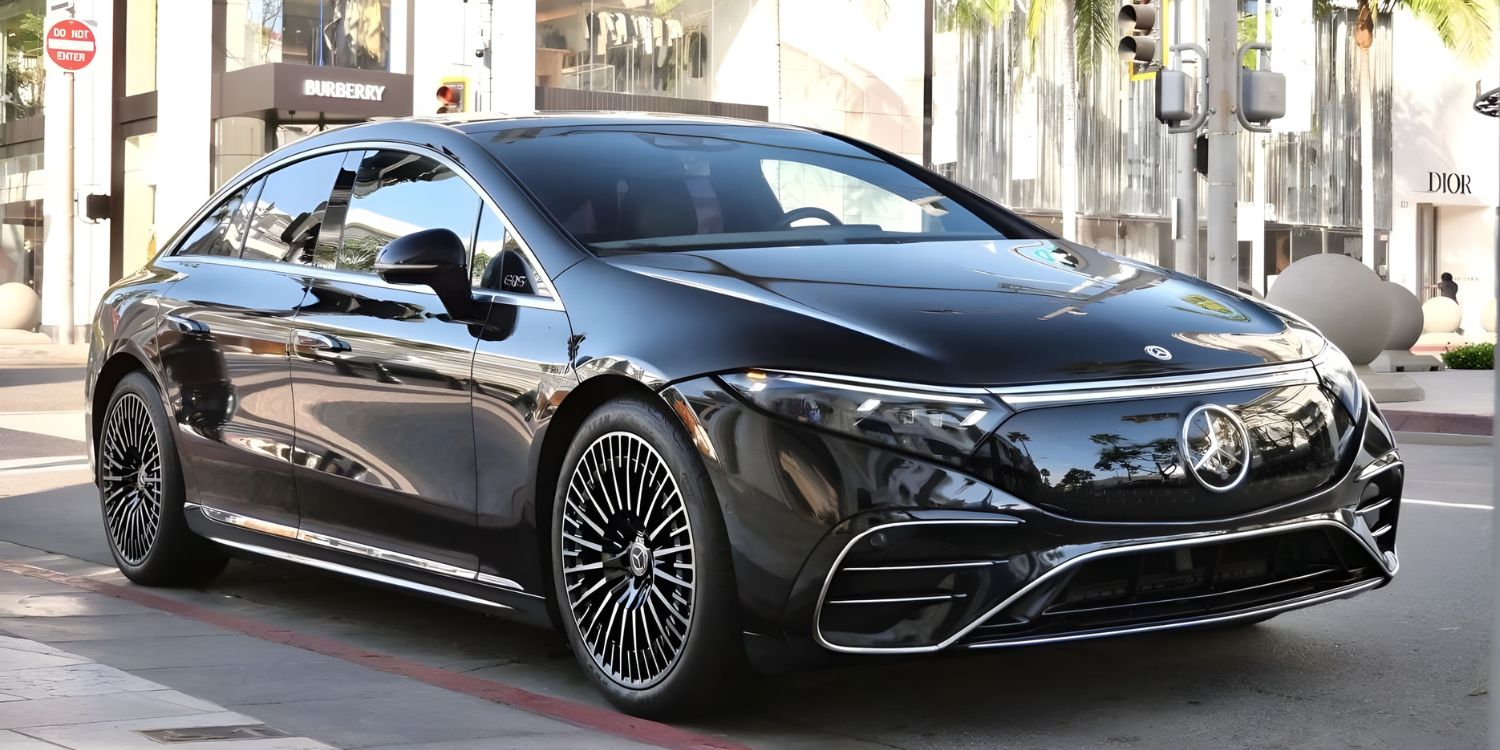
For much of the modern automotive era, Mercedes-Benz operated with a kind of quiet inevitability. The brand didn’t need to over-explain itself. It represented engineering authority, understated status, and a product hierarchy so clear that even non-enthusiasts understood the difference between an entry-level Mercedes and a flagship one.
That clarity—more than horsepower, screens, or quarterly results—was the real asset. It’s also what has been tested over the last decade.
Mercedes-Benz remains one of the most capable manufacturers in the world. The question is not whether it can build excellent cars. The more consequential question is whether the brand still feels like a singular institution—or whether it has begun to resemble a premium conglomerate under one badge, stretched across too many audiences at once.
Stops Editing
Every luxury house learns the same lesson eventually: growth is easy; maintaining meaning is hard.
Mercedes built its stature through restraint. The lineup once felt curated, with a clear ladder from entry point to flagship—each rung borrowing credibility from the top. That hierarchy communicated confidence: Mercedes didn’t chase segments; it defined them.
Then the range expanded aggressively—into compact cars, additional derivatives, and overlapping sub-categories designed to capture increasingly specific consumer profiles. The logic was familiar: defend market share, widen the funnel, create more points of entry. But in luxury, the cost of overextension is not immediately measured in sales—it is measured in perception.
When a brand offers too many products too close together, the customer stops seeing a clear hierarchy and starts seeing a catalog. And when the badge becomes ubiquitous, it becomes less symbolic.
The risk is not that Mercedes built smaller vehicles. Entry products can be strategic. The risk is that the brand began to feel less edited—less intentional—at exactly the moment when luxury buyers were looking for stronger signals of identity, not weaker ones.
The High Price of “Pleasing Everyone”
Mercedes’ modern expansion strategy reflects a broader tension facing every legacy prestige brand: the temptation to become both aspirational and widely accessible at the same time.
That can work—if the entry point still feels like the brand’s values, distilled. It fails when accessibility becomes the message. A Mercedes is expected to project calm authority, not effort. It is supposed to feel composed, engineered, and timeless. When product decisions begin to read like segmentation strategy rather than brand philosophy, the emotional equation changes.
In luxury, inconsistency is corrosive. Not because customers obsess over details, but because they feel the shift instinctively. The brand’s promise—what the badge means—becomes harder to summarize.
And once a premium brand becomes hard to summarize, it becomes easier to substitute.
EVs and the Problem of Discontinuity
Electrification is not optional. Mercedes, like every global manufacturer, had to build credible EV products. The misstep was not the direction—it was the discontinuity.
Mercedes’ EV era arrived during a period when the brand’s identity was already being stretched by lineup complexity. The EV strategy added another layer: a design language and emotional tone that, at times, felt parallel to traditional Mercedes rather than evolved from it.
Luxury brands can modernize without losing their signature. In fact, the best ones do. But when the aesthetic and emotional cues shift too abruptly—when the vehicles feel like they belong to a different brand universe—the customer is left with a subtle but powerful impression: Mercedes is experimenting in public.
Innovation signals leadership only when it feels anchored. When it feels unmoored, it reads as searching.
Portfolio Discipline: Signs of a Course Correction
Over the past few years, Mercedes has already begun trimming parts of its range—quietly discontinuing select nameplates and derivatives as it rethinks complexity, margins, and brand clarity. That pruning matters. In luxury, focus is not a limitation; it is a strategy. If Mercedes can continue to protect the models that carry the brand’s core values—design restraint, engineering gravitas, and flagship-led authority—while retiring the products that exist mainly to fill niches, it can restore a sharper hierarchy and a stronger point of view. Done well, portfolio discipline becomes more than cost control; it becomes a brand reset—and a credible way to turn the ship around.
The Icon Test: Where Brands Either Protect Their Myth—or Weaken It
Every great luxury brand has a small set of products that function as cultural anchors. They are not merely profitable. They are myth-makers.
For Mercedes, the S-Class has long served as a benchmark, AMG as the performance conscience, and the G-Class—particularly the G 63—as a global status object with a presence that transcends the automotive category. These icons do more than sell units. They uphold the brand’s authority.
That is why any perceived willingness to compromise the emotional core of these vehicles—particularly the V8 identity in models where it defines the experience—is strategically dangerous. In the luxury business, rationality is rarely the point. Desire is.
An icon can evolve. But if it becomes emotionally unrecognizable, it stops functioning as an icon. And when the icons weaken, the entire lineup loses the halo that makes entry products feel elevated.
BMW’s Parallel Risk: When Growth Blurs the Promise
Mercedes is not alone in navigating this. If another German prestige brand is flirting with similar risks, it is BMW.
BMW built its modern reputation on a straightforward proposition: driver-focused engineering with a premium edge. Yet the same dynamics apply. A single badge can only stretch so far before coherence suffers. When portfolios become dense with overlapping variants and design becomes more polarizing than timeless, the brand’s meaning becomes less stable.
In the short term, this can generate attention. In the long term, it creates a different problem: the badge becomes a conversation rather than a symbol.
Luxury brands do not want to be debated. They want to be desired.
Why Volkswagen Group’s Portfolio Strategy Protects Identity
Volkswagen Group offers a useful contrast, not because it is immune to market forces, but because its structure allows expansion without forcing one badge to carry every demographic.
A portfolio of distinct brands can pursue volume and preserve prestige simultaneously. Instead of stretching one name across conflicting audiences, VW distributes those audiences across separate identities with separate promises. Mass-market buyers are not asked to purchase the same badge that signals ultra-luxury, and ultra-luxury customers are insulated from the perception erosion that comes with ubiquity.
It is brand architecture as risk management. And in an era where legacy prestige is increasingly fragile, architecture matters.
The Real Question Mercedes Must Answer
Mercedes-Benz still has the capabilities that made it great: engineering depth, heritage, global scale, and an ability to produce vehicles that are genuinely exceptional. The challenge is strategic, not technical.
The question is whether Mercedes can restore the clarity that made the brand feel inevitable—by reducing overlap, reasserting hierarchy, and ensuring that innovation reads as evolution rather than reinvention.
The path forward is not nostalgia. It is focus:
a tighter lineup with clearer purpose
design continuity that modernizes without abandoning DNA
technology that amplifies elegance rather than replacing it
and unwavering protection of icons that anchor aspiration
Mercedes does not need to be for everyone.
It needs to be unmistakably Mercedes again—coherent, confident, and culturally authoritative.