The Porsche 911 Targa Color Guide: What Your Paint Choice Says About You
BY FALCON CAR RENTAL
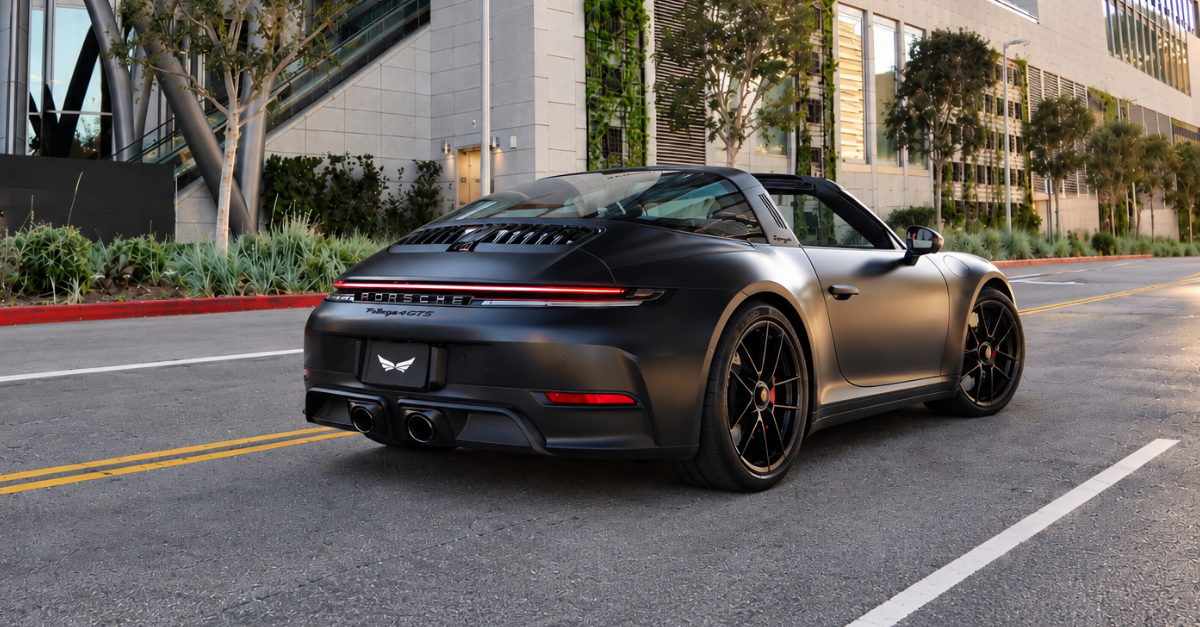
Few sports cars are as sensitive to color as the Porsche 911 Targa.
The shape is already iconic. Porsche introduced the Targa concept in 1965, and the signature roll-over bar eventually became one of the most recognizable design elements in the company’s history. Today’s 911 Targa carries that idea forward with a fully automatic roof, wraparound rear glass, and the unmistakable bar that visually separates it from both the 911 Coupe and Cabriolet.
Because the design is so established, paint does more than decorate the car. It changes its personality.
A dark finish can make the Targa feel more technical and discreet. Deep blue brings out its grand-touring side. Green can connect the car to Porsche’s enormous catalog of historic colors, while white emphasizes the architecture of the body itself.
And Porsche owners have more freedom than most. Beyond the regular color palette, Porsche’s Paint to Sample program offers a much wider selection of historic and contemporary shades. Exact availability varies by model year and market, which is worth remembering when discussing colors such as navy or olive green. Likewise, a true matte-black appearance may come from a high-quality satin or matte wrap rather than a standard factory paint option.
With that in mind, here is how five very different color directions change the character of the 911 Targa.
Matte Black: The Modern Minimalist
A matte or satin black Targa has an entirely different presence from a conventional black car.
Instead of reflecting everything around it, the finish reduces glare and places more emphasis on the shape itself. The wide rear body, wheels, roofline, and Targa bar become the visual focus. That gives the car a more technical, contemporary appearance.
It also changes how the Targa fits into Los Angeles.
Against modern architecture, darker hotel entrances, and the cleaner residential design found throughout Beverly Hills, a matte-black 911 can feel almost architectural. At night, the body becomes more subdued while the lighting, wheels, and metal details stand out more clearly.
There is one important distinction, however: “matte black” should be treated as a styling direction rather than assumed to be a standard Porsche paint. Depending on the exact car, that appearance may be achieved through a satin or matte protective film or wrap.
For travelers who hire a luxury convertible at LAX, this darker specification works particularly well when the itinerary leans toward Beverly Hills, West Hollywood, evening dinners, and a more understated version of Southern California luxury.
It feels intentional rather than flashy.
Gloss Black: Classic, Formal, and Confident
Gloss black gives the same 911 a noticeably different personality.
Where matte black minimizes reflection, gloss black uses it. Sunlight moves across the bodywork and emphasizes the curvature of the rear fenders, while city lights give the car more depth after dark.
It is also one of the most versatile ways to specify a Targa.
A black 911 can look appropriate outside a business meeting during the day and still feel completely at home at a hotel or restaurant that evening. Pair it with the traditional silver-colored Targa bar and the contrast becomes part of the design. A darker bar and wheels create a more monochromatic, modern result.
Gloss black suits someone who wants the car to feel polished without relying on a bright color to create presence.
It does not make the Targa anonymous. Very little could.
It simply lets the recognizable shape do most of the talking.
Navy Blue: The Quietly Sophisticated Choice
Deep blue may be one of the best colors for someone who likes the restraint of black but wants more personality.
Depending on the exact shade, navy can look almost black in low light and reveal far more depth under the California sun. That ability to change with the surroundings makes it particularly well suited to the Targa, a car whose own personality shifts between sports car and open-top grand tourer.
Porsche has offered numerous dark blues throughout the 911’s history, and Paint to Sample significantly expands what is possible beyond the regular palette. So rather than treating “navy blue” as one specific factory color, it makes more sense to think of it as a family of deep blues.
For someone planning to rent a Porsche in Beverly Hills, a deep blue Targa feels especially appropriate. It has enough color to stand apart from the endless black, white, and gray luxury cars around Los Angeles without becoming loud.
Along the coast, the personality changes again. The blue picks up the ocean, sky, and softer evening light, giving the car a more relaxed grand-touring character.
It is distinction without spectacle.
Olive Green: For the Porsche Enthusiast Who Knows the Details
Green carries a particular kind of weight in the Porsche world.
Over the decades, Porsche has produced an enormous variety of green finishes, and the Paint to Sample program continues to give clients access to colors inspired by the company’s history as well as newer shades.
A darker olive-style green works especially well on the Targa because both the color and the body style have a heritage quality without needing to look retro.
The interior specification matters enormously here. Green with tan, cognac, or brown leather creates a warmer, more traditional grand-touring look. Pair the same exterior with black leather and darker wheels and the car becomes much more contemporary.
Olive also responds strongly to its surroundings. In Beverly Hills, it looks distinctive and deliberate. Along the roads above Malibu, Santa Barbara, or Northern California, it feels more connected to the landscape.
This is probably the least obvious choice of the five, and that is exactly the appeal.
It suggests someone who did not simply choose the safest available color. They thought about the specification as a whole.
White: Let the Targa Design Speak
White does almost the opposite.
Rather than adding personality through color, it strips the design back to its fundamentals.
The roof structure, Targa bar, glass, wheels, lights, and darker lower details become more obvious because they contrast so strongly against the body. On a car with a silhouette as established as the 911, that simplicity can be extremely effective.
Southern California also gives white cars an ideal environment. Strong sunlight keeps the finish crisp, and the color looks natural against modern architecture, palm-lined streets, and coastal scenery.
The final personality depends heavily on the details.
White with black wheels and dark trim feels much more sporting. White with silver wheels and a lighter interior can feel more elegant and traditional. A contrasting roof or Targa bar can change the visual balance again.
That is why white should not be dismissed as the basic choice.
On the right 911, simplicity can be the specification.
The Targa Bar Matters Almost as Much as the Paint
One reason color works differently on the Targa than on another 911 is the roof structure itself.
The bar creates a second major design element across the car, so the relationship between body color, roof, glass, wheels, and bar matters enormously. Porsche has historically offered the Targa bar in its characteristic metallic finish as well as darker treatments depending on model and specification.
A dark blue or green body with a silver-colored bar emphasizes heritage. Black paint with dark trim creates something far more contemporary. White with the contrasting bar makes the architecture of the Targa especially obvious.
This is why selecting a Targa purely from a paint swatch can miss half the story.
The entire specification needs to work together.
Which Color Is Best for a California Road Trip?
The answer depends less on resale logic and more on the atmosphere you want.
A deep blue or olive Targa feels particularly natural on longer coastal routes, where changing light brings more depth out of the paint. White is almost impossible to get wrong in Southern California and photographs beautifully in bright conditions. Gloss black has the greatest range between daytime formality and nighttime presence, while matte or satin black gives the car the most modern and visually aggressive personality of the group.
For a Porsche 911 rental for a road-trip, the color becomes part of the experience because the car is constantly changing environments. Beverly Hills in the morning, Malibu in the afternoon, Santa Barbara in the evening, and a hotel arrival after sunset can make the same specification look completely different over the course of one day.
That is part of what makes the Targa such a natural California car.
Do Not Forget the Interior
Exterior color gets most of the attention online, but once you are actually using the car, you spend far more time looking at the interior.
That is why the strongest specifications consider both together.
Deep blue with tan or cognac creates a sophisticated grand-touring combination. Olive green with brown can lean into Porsche heritage. White and black create a crisp, modern contrast. A black exterior with a lighter cabin makes the car feel less severe every time the door opens.
Porsche’s customization options make these combinations almost endless, particularly once Exclusive Manufaktur and Paint to Sample enter the conversation.
The goal should not simply be selecting two individually attractive colors.
The exterior and interior should feel like they belong to the same idea.
The FALCON Perspective
At FALCON car rental, color matters because clients rarely experience a luxury vehicle in isolation.
The car is part of a hotel arrival, a dinner, a coastal road trip, a weekend in Beverly Hills, or a drive along the Pacific. The same Porsche can communicate something completely different depending on its specification and surroundings.
A matte-black Targa at night feels purposeful and modern. Deep blue on the coast feels more sophisticated. Olive green can make the car feel almost collectible, while white emphasizes the timeless simplicity of the 911 design.
None is objectively better.
That is exactly the point.
The Targa has enough identity to let color express the personality of the experience rather than compensate for a weak design.
Final Thoughts
The Porsche 911 Targa has survived because Porsche never treated its design as something that needed to be reinvented every few years. The signature roof concept dates back more than six decades, and the current car still uses the Targa bar as one of its defining visual elements.
Color simply changes the way that identity is expressed.
Matte black feels technical and restrained. Gloss black feels polished. Navy brings quiet sophistication. Olive green adds heritage and individuality. White puts the emphasis back on the architecture of the car itself.
The best choice is not necessarily the rarest or most expensive color.
It is the one that makes the Targa feel right for the setting, the journey, and the person behind the wheel.
Because on a design this recognizable, paint does more than change how the car looks.
It changes the way the car is remembered.